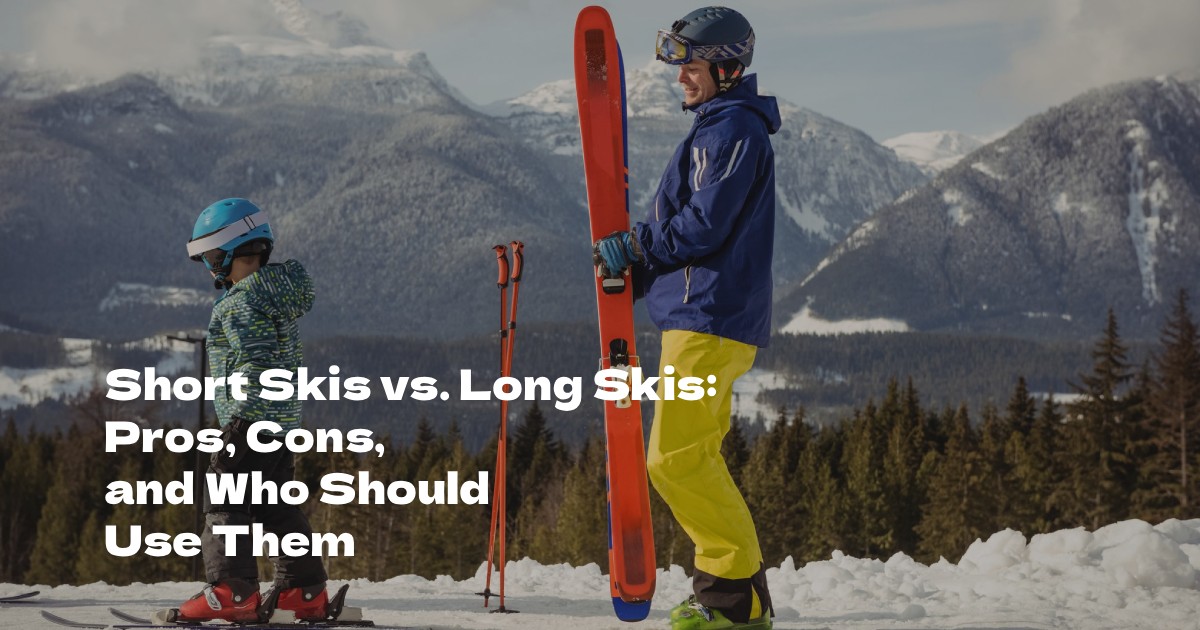
Hello, my friends, and welcome back to the slopes! As a ski instructor who has logged more hours on snow than I have on solid ground, I’ve seen the evolution of ski design firsthand. I remember the days of impossibly long, straight skis, and I’ve embraced the era of shorter, shaped skis. This journey has taught me one thing: the length of your ski is a deeply personal choice, and it’s one of the most significant factors that dictates your experience on the mountain. It’s the core of the debate: Short Skis vs. Long Skis.
This isn’t just a matter of a few centimeters; it’s a fundamental decision that affects everything from how easily you can turn to how stable you feel at high speeds. A ski’s length is a direct measure of its surface area and its effective edge, and these two things are the foundation of its performance characteristics. Choosing the right length is the difference between a day of effortless, joyful turns and a day of fighting your equipment, leaving you tired and frustrated.
My goal here is to cut through the noise and give you a clear, honest breakdown of the advantages and disadvantages of both short and long skis. We’ll explore the physics behind their performance and, most importantly, I’ll help you determine which camp you belong in based on your skill level, skiing style, and the terrain you love to conquer. So, let’s settle this age-old debate and find the perfect length for your next mountain adventure!
The Short Ski Advantage: Agility, Forgiveness, and Fun
When we talk about “short skis,” we are generally referring to skis that fall on the shorter end of the manufacturer’s recommended range for a skier of your height and ability, typically reaching somewhere between your chin and nose. Modern ski technology, particularly the advent of sidecut and rocker, has made shorter skis incredibly capable, moving them far beyond the realm of just “beginner” equipment.
Pros of Short Skis:
- Unmatched Maneuverability and Quickness: This is the undisputed champion advantage of a shorter ski. With less material to pivot, they are incredibly quick edge-to-edge. This makes them a dream for tight spaces like moguls, tree runs, and crowded slopes [1, 2]. They allow for rapid-fire, short-radius turns with minimal effort.
- Ease of Turn Initiation: Less length means a shorter effective edge, which requires less force and speed to engage. This makes initiating a turn significantly easier, a massive benefit for beginners and intermediate skiers who are still developing their technique and strength [2].
- Forgiveness: Shorter skis are inherently more forgiving of technical errors. If you find yourself in the back seat or slightly off-balance, a shorter ski is easier to bring back under control. This forgiveness is a huge confidence booster for those learning or skiing cautiously.
- Less Fatiguing: Less mass and less effective edge means less physical effort required to manipulate the ski. You can ski longer and harder without your legs turning to jelly, making them a great choice for long ski days or those with less leg strength.
- Great for Park and Play: Freestyle skiers and those who love to play on natural features often prefer shorter skis for their ease of spinning, jumping, and landing switch.
Cons of Short Skis:
- Reduced Stability at Speed: The biggest trade-off for maneuverability is stability. A shorter effective edge means less contact with the snow, which can lead to a feeling of chatter or instability when you try to push the speed limit on firm snow [1].
- Less Flotation in Deep Snow: Less surface area means less lift. In deep powder, a short ski will sink more easily, requiring more effort and a more centered stance to stay afloat. They will feel less “surfy” than a longer ski of the same width.
- Less Power and Edge Grip: While they are quick, they offer less power and a smaller platform for aggressive carving. Advanced skiers trying to lay down a deep, powerful arc on hardpack might find a short ski washing out or lacking the necessary grip [3].
The Long Ski Advantage: Stability, Power, and Float
“Long skis” are those that fall on the longer end of the manufacturer’s recommended range, typically reaching your forehead or slightly above your head. These skis are the choice for those who crave speed, power, and the ability to charge through variable conditions without hesitation.
Pros of Long Skis:
- Superior Stability at High Speeds: The increased effective edge and mass of a longer ski provide a much larger platform on the snow. This dampens vibrations and translates to incredible stability and confidence when you’re flying down the mountain [1, 2].
- Better Flotation in Powder and Chop: More surface area means better lift. In deep powder, a long ski will float effortlessly, giving you that coveted “surfy” feeling. In crud or chop, the extra length helps the ski blast through and over the snow without getting deflected, providing a smoother ride [1].
- Increased Power and Edge Grip: The longer edge allows you to engage more of the ski in a turn, providing a more powerful, consistent, and reliable edge grip, especially on hardpack and ice. This is essential for aggressive, high-performance carving [3].
- Larger Sweet Spot: A longer ski often has a larger “sweet spot” the area where you can stand and still feel balanced and in control. This can actually make them more forgiving for advanced skiers who are constantly pushing the limits of their technique.
Cons of Long Skis:
- Slower Edge-to-Edge: The increased length and mass require more effort and time to transition from one edge to the other. This makes them feel sluggish and cumbersome in tight spots like moguls or tree runs [2].
- More Demanding to Turn: Initiating a turn requires more force and speed to bend the longer, stiffer ski. This can be very fatiguing and frustrating for beginners or those with less strength.
- Less Forgiving of Errors: If you get off-balance on a long ski, it takes more strength and skill to recover. They are less forgiving of poor technique, often punishing mistakes with a fall.
The Verdict: Who Should Ski Short, and Who Should Ski Long?
The choice between a short and a long ski is ultimately a reflection of your personal skiing profile. It’s not about which is objectively “better,” but which is better for you. Here is my professional breakdown of who should lean towards which length:
Choose a Shorter Ski If You Are:
- A Beginner or Cautious Intermediate: The forgiveness and ease of turning will accelerate your learning and build confidence.
- A Skier with Less Strength or Weight: You will be able to flex the ski more easily, making it more responsive and less fatiguing.
- A Park/Freestyle Skier: The maneuverability is key for tricks, spins, and switch riding.
- A Skier Who Prefers Tight Terrain: If you spend your day in the bumps, trees, or on crowded slopes, the quickness of a shorter ski is invaluable.
- A Skier Who Prefers Shorter Turns: If your natural turn shape is a short, snappy arc, a shorter ski will feel more intuitive.
Choose a Longer Ski If You Are:
- An Advanced or Expert Skier: You have the strength and technique to drive the longer ski and will benefit from the increased stability and power.
- An Aggressive, High-Speed Skier: If you love to charge and push the speed limit, the stability of a longer ski is non-negotiable.
- A Skier Who Prioritizes Powder and Off-Piste: The added flotation and ability to blast through crud will make your off-piste experience smoother and more enjoyable.
- A Heavier Skier: The extra length will prevent the ski from over-flexing, providing the necessary platform for stability and edge hold.
- A Skier Who Prefers Long Turns: If you like to lay down big, sweeping arcs, a longer ski will feel more balanced and powerful throughout the turn.
The Modern Nuance: Rocker and Effective Edge
It’s important to note that modern ski design has blurred the lines between short and long. The introduction of rocker (early rise in the tip and/or tail) means that a ski’s effective edge (the part of the edge that actually touches the snow during a turn) is often shorter than its physical length [3].
A 185cm Ski with Rocker might have the same effective edge as a 175cm Ski with Full Camber. This means you can often ski a longer, rockered ski without it feeling as cumbersome as a traditional, full-camber ski of the same length. The rockered tip and tail make the ski feel shorter and more maneuverable in soft snow, while the overall length provides stability at speed when the ski is fully flexed.
When choosing your length, always consider the ski’s profile. If a ski has a lot of rocker, you can generally size up a few centimeters from what you might traditionally choose.
Short vs. Long: A Quick Comparison
Here is a table summarizing the key differences to help you visualize the trade-offs:
| Feature | Short Skis | Long Skis | Ideal Skier |
|---|---|---|---|
| Maneuverability | Excellent (Quick, nimble) | Fair (Slower, requires more effort) | Beginners, Freestyle, Tree Skiers |
| Stability at Speed | Fair (Prone to chatter) | Excellent (Damp, stable) | Aggressive, Expert, High-Speed Skiers |
| Turn Initiation | Easy (Low effort) | More Demanding (Requires more force/speed) | Beginners, Cautious Skiers |
| Flotation in Powder | Fair (Sinks more easily) | Excellent (Floats effortlessly) | Powder Hounds, Freeriders |
| Edge Grip/Power | Good (Less platform for aggressive carving) | Excellent (Powerful, consistent grip) | Expert Carvers, Heavier Skiers |
| Forgiveness | High (Easy to recover from errors) | Low (Punishes poor technique) | Beginners, Intermediate Skiers |
Final Thoughts: Trust Your Feel
Ultimately, the best ski length is the one that feels right under your feet. Don’t let a chart or a friend’s opinion dictate your choice entirely. Use the guidelines of height, weight, and skill to narrow down your range, but then demo, demo, demo!
Try a ski on the shorter end of your range and one on the longer end. Pay attention to how easily you can initiate a turn, how stable you feel when you push the speed, and how much energy they demand. The ski that makes you smile the most is the right one.
The mountain is waiting, and with this knowledge, you are now equipped to choose the perfect partner for your next descent.
Happy skiing, my friends!
References & Source
- Snowfeet Store. Short Skis vs. Long Skis: https://www.snowfeetstore.com/blogs/snowfeet_skiskates_skiboards_snowblades_skiblades_mini_skis_short_skis/short-skis-vs-long-skis
- Powder. Are My Skis Too Long? An Expert Weighs In on Length: https://www.powder.com/news/are-your-skis-too-longer-ski-reviewer-explains
- Coalition Snow. You Should Be Skiing Longer Skis – Here’s Why: https://www.coalitionsnow.com/blogs/shoptalk/you-should-be-skiing-longer-skis-here-s-why