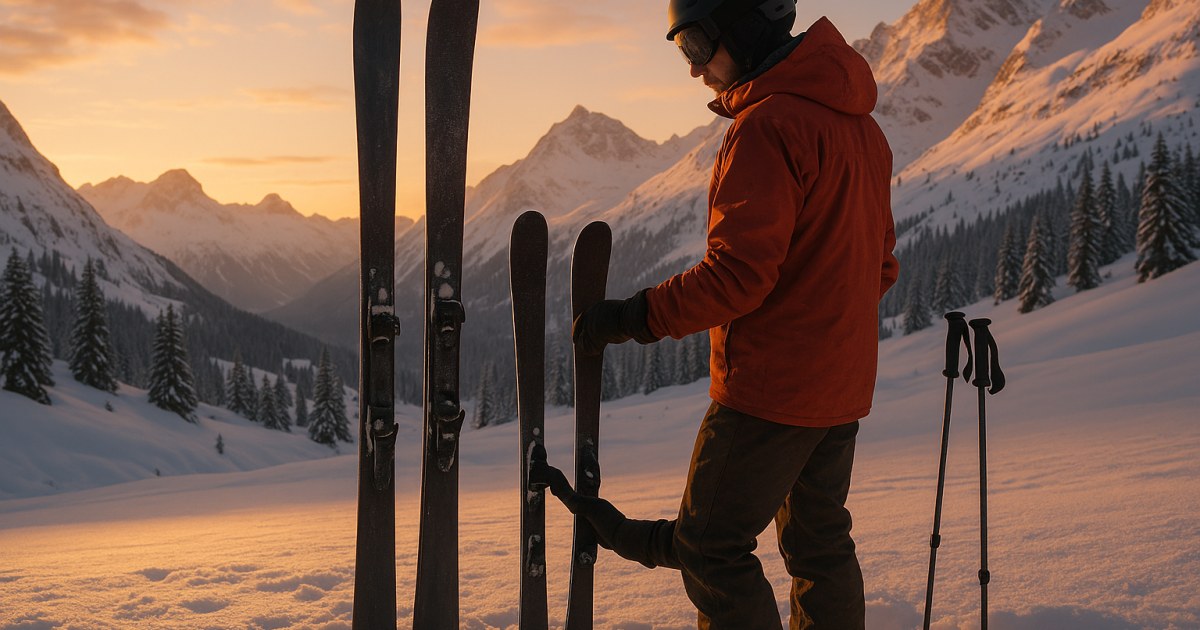
There’s a certain magic in finding skis that feel just right under your boots. With so many options on the wall-different lengths, shapes, constructions-it can get overwhelming, even for seasoned skiers. Yet, one critical factor is often overlooked: how a ski’s stiffness influences the length you should choose.
This isn’t just a detail for elite racers or gear obsessives. Whether you’re carving groomers, chasing powder, or tackling steep bumps, understanding this relationship can transform your experience on snow. Let’s break it all down so you can approach your next ski decision with confidence and a trained eye.
We’ll explore what ski stiffness actually means, why it shifts your ideal ski length, and how to balance these characteristics for your skill level and favorite terrain. Plus, you’ll find practical charts, expert tips, and concrete recommendations tailored for real-world scenarios.
Understanding Ski Stiffness: Flex Explained
Ski stiffness refers primarily to how much force it takes to flex the ski-either bending it tip-to-tail (longitudinal flex) or twisting it edge-to-edge (torsional flex). Manufacturers adjust materials, core construction, and thickness to create skis ranging from butter-soft to race-stiff. Both flex patterns considerably impact how the ski interacts with snow, edge grip, and turn initiation.
Key Types of Flex
- Soft flex: Easier to bend; forgiving, great for lighter skiers and beginners. A soft ski will deform more easily under a given force, helping those who lack strength or refined technique to bend the ski as needed. It’s forgiving when your balance is off and makes exit and entry into turns smoother.
- Medium flex: Balanced for all-mountain versatility; supports intermediate to advanced progress. Medium flex delivers both a measure of forgiveness and improved responsiveness, which is why many popular all-mountain skis land here.
- Stiff flex: Harder to bend; offers greater stability at speed, ideal for aggressive or heavy skiers. Stiffer skis require more input to flex, but they stay composed at high speeds, resist chatter in rough conditions, and grip better on ice and hardpack. However, for lighter or less technical skiers, stiff skis may feel unresponsive or punishing.
Flex ratings can be subjective, but most brands provide some indication using a 1–10 scale or descriptive range (e.g., soft, medium, stiff). Oftentimes, the distribution of flex isn’t uniform along the ski’s length-a ski might have a softer tip for easier turn initiation and a stiffer tail for stability, further complicating the choice.
The Interaction of Stiffness and Length: Why It Matters
Stiffness and length are two sides of the same coin: both influence how much support, stability, and control you have at speed and in varying snow. Choosing a “standard” ski length without considering stiffness can mean a ski that feels either floppy or unyielding.
In practical terms, ski length acts as a lever. A longer ski of the same construction will naturally be stiffer when you try to bend it, simply because there’s more material resisting the force. At the same time, a stiffer ski feels shorter in practice, as it resists the bending that creates grip and control in a turn. This interplay means you can adjust one factor to compensate for the other, depending on your needs.
How Stiffness Compensates for Length
- Softer skis feel more manageable in shorter lengths but may lack edge hold at higher speeds if too short. Too soft and too short, and you’ll struggle with keeping the ski on edge or stable when you pick up speed or hit variable snow.
- Stiffer skis offer better support but require more input; in longer lengths, they can become difficult to control for lighter or less powerful skiers. Likewise, a short stiff ski can be very twitchy or unforgiving.
Modern ski design mixes these parameters for targeted use: park skis tend to be softer and shorter for tricks and pivots, while race skis extend longer and stiffer for hold and speed. Manufacturers tend to make their longest skis stiffer, but the relationship isn’t absolute. Weight, technique, and terrain all play into the ideal combo.
Practical tip: If you’re between sizes, a softer ski may allow you to size up for stability, while a very stiff ski is often best chosen at the lower end of your recommended range. Try to honestly assess your strength and skiing style alongside your physical stats.
Factors That Magnify the Importance of Stiffness-Length Balance
- Speed: Higher speed demands more stability, generally requiring longer or stiffer skis-but there is a trade-off with nimbleness.
- Snow Conditions: Hardpack and ice magnify the need for edge grip (stiffness), whereas deeper or softer snow rewards a longer, floatier, but often more compliant flex.
- Fatigue and Recovery: Stiffer or longer skis can tire you more quickly, especially in bumps or tight terrain where absorption and quick reactions are critical.
Skill Level and Flex: Matching Rider to Rig
Your skill level plays a huge role in how you experience ski stiffness. Newer skiers often benefit from forgiving flex that makes it easy to initiate turns. Experienced and expert skiers may seek out stiffer skis for precise control in challenging conditions.
| Skill Level | Recommended Flex | Suggested Length Adjustment |
|---|---|---|
| Beginner | Soft | Short to medium length |
| Intermediate | Medium | Standard chart range |
| Advanced | Medium to stiff | Medium to longer (if confident) |
| Expert / Aggressive | Stiff | On the longer end |
It’s easy to “over-ski” a soft ski (outgrow it as you improve) or “under-ski” a stiff one (struggle to flex it). Adjust your ski length accordingly to your style and ability.
Practical Guidance by Level
- Beginners: Prioritize easy turns and low fatigue over high-speed stability. Err toward shorter, softer skis-these help learn the fundamentals.
- Intermediates: Balance stability and maneuverability. This group benefits most from medium flex and standard chart sizing. If you’re progression-oriented, consider a slightly longer ski as your technique improves.
- Advanced & Expert: Opt for stiffer and longer skis as aggression and speed rise. However, don’t go so stiff/long that you lose the ability to finesse or recover quickly in rough terrain. Advanced technique allows you to access the full performance envelope of demanding skis, but skis that are too much can still be exhausting and difficult in tight spots.
Terrain Style: How Stiffness and Length Shift by Zone
The right stiffness-length combo also depends on the terrain you ski most. Here’s how different environments favor certain setups:
- Groomed Runs: Firmer, stiffer skis can be sized longer for stability at speed; recreational skiers might opt for medium flex in a standard length. Carving the corduroy rewards strong edge hold and consistent flex.
- Bumps and Trees: Softer, shorter skis are more nimble and easier to pivot. Quick direction changes and absorption over undulating snow are easier with forgiving, lively flex patterns and more compact skis.
- Powder/Off-piste: Slightly longer soft-to-medium flex skis provide float and shock absorption, but avoid ultra-stiff unless you charge aggressively. More surface area is crucial for flotation, but too much stiffness can make deep snow feel like hard work unless you’re highly skilled and strong.
- Moguls: Shorter, softer skis are easier to manage through tight lines. Responsiveness and the ability to quickly decamber the ski with less force trump high-speed stability in this terrain.
Terrain and Stiffness Table
| Terrain | Flex Recommendation | Length Guidance |
|---|---|---|
| Groomers | Medium - Stiff | Medium - Longer |
| Moguls/Trees | Soft - Medium | Shorter - Medium |
| Powder | Medium | Longer (for float) |
| Mixed | Medium | Standard size |
Ask yourself where you spend most of your days and prioritize stiffness and length accordingly.
Practical rule: For advanced skiers who split their time between firm morning corduroy and afternoon soft snow, a medium-stiff, average length ski offers the best compromise across conditions.
Special Terrain: Steeps, Backcountry, and Racing
- Steeps and technical terrain: Go for moderate length but above-average stiffness if you want performance and reliability at speed-just be honest about your ability to control it.
- Backcountry: Weight becomes crucial for uphill travel. Many choose lighter and slightly softer skis, often a touch shorter for maneuverability through tight trees and variable snow. However, overly soft skis can be fatiguing descending heavy snowpacks.
- Racing: Emphasize stiffness and length (within regulatory limits) for maximum edge hold and stability. Racers typically choose the stiffest and longest skis they can control given their weight and strength.
Body Weight and Ski Dynamics
Your weight is a critical piece of the sizing puzzle. Heavier skiers will flex a ski more, while lighter skiers might not activate a stiff ski properly. Manufacturers often publish recommended weight ranges for each ski length and flex.
Weight-Based Length and Flex Considerations
- Lighter than average skiers: Opt for softer or shorter skis if on the border between lengths. Overly stiff or long skis will feel reluctant to initiate turns and become tiring quickly.
- Heavier than average skiers: Consider going stiffer or longer for added support and stability. Too much flexibility can make the ski feel wobbly and unpredictable, especially at higher speeds or in mixed snow.
- Average weight: Follow manufacturer’s main recommendations, but account for preferred style and local snow conditions.
Many recreational models are designed with a "medium" flex that can accommodate a wide range of skier weights and abilities, but specialized skis (race, powder) skew stiffer or softer.
| Weight Range | Flex Suggestion | Length Correction |
|---|---|---|
| < 130 lbs (59 kg) | Soft to medium | Consider sizing down or softer flex |
| 130–180 lbs (59–82 kg) | Medium (most skis) | Follow chart & terrain advice |
| > 180 lbs (82 kg) | Medium to stiff | Consider sizing up or stiffer flex |
This is a helpful baseline, but skill and preference always matter. A light but powerful skier may happily ski long stiffer boards; a heavy but cautious intermediate might still prefer something softer and shorter.
How Manufacturers Rate Flex: What to Watch
Flex ratings lack industry-wide standardization, but a few guidelines can keep you on track:
- Check brand charts and flex numbers, understanding that a “7” from one brand may not match another. Read reviews and consult specialist shops for real comparisons.
- Firmer racing skis are typically noticeably stiffer than all-mountain or woman-specific models at the same length.
- Hand flexing a ski in the shop can reveal both longitudinal and torsional stiffness, but demoing is ideal. Try comparing a race ski, an all-mountain model, and a freestyle/park ski of similar length to calibrate your sense for differences in stiffness.
- Women’s-specific skis are sometimes tuned with softer flex, matching statistical body weight differences-though aggressive female skiers may want the stiffer unisex or men’s models at a suitable length.
Sample Flex Comparison Table
| Sample Model | Flex Rating | Skill Range | Best Sizing Tip |
|---|---|---|---|
| All-Mountain, Unisex | 5/10 (Medium) | Intermediate | Go by chart, adjust for aggressiveness |
| Carving, Performance | 7/10 (Stiff) | Advanced/Expert | Medium to longer, unless lightweight |
| Freestyle, Park | 4/10 (Soft-medium) | Beginner to Advanced | Medium or shorter for maneuverability |
| Powder, Directional | 6/10 (Medium-stiff) | Advanced | Longer for float |
This flexibility helps you fine-tune the ride, but always pair chart recommendations with your hands-on impressions and personal preferences. Review field tests and trusted reviews where testers put skis through real-world use.
Quick-Reference Chart: Stiffness and Length Summary
Here’s a handy summary you can refer to next time you size up your options:
| If ski is... | Adjust Length | Best For |
|---|---|---|
| Very soft | Can size up slightly | Lighter/less aggressive, bumps, trees |
| Medium flex | Standard size | Most skiers, mixed terrain |
| Stiff | Consider sizing down | Aggressive, fast, heavy skiers |
- When in doubt, favor stability for speed, and agility for control in tight spots.
- Your confidence and comfort matter as much as a chart number!
Real-World Scenarios: Examples
Example 1: The Weekend Groomer Cruiser
Julia enjoys blue and black groomers and skis at moderate speed, weighing 150 lbs (68 kg). On a standard sizing chart, an all-mountain ski of 165 cm would suit her. But she wants a stiffer carving ski. She could confidently drop to 160 cm for better control and easier turn initiation while still feeling stable at her pace. This reduces the energy Julia needs to flex the ski and helps prevent fatigue over a long session spent linking turns on hardpack.
Example 2: Powder Seeker in the West
Ben, an advanced skier at 200 lbs (90 kg), sticks to wide skis with a medium flex for soft snow. His chart size is 180 cm, but he upsizes to 185 cm for extra surface area-knowing the ski isn’t too stiff, so it’s still maneuverable for his weight and skill. Since Ben likes to surf rather than charge through powder, he benefits from a longer platform for float, but avoids a super-stiff ski that would require more muscle and potentially dive in soft snow.
Example 3: Lightweight Technical Skier
Arjun, at just 120 lbs (54 kg) and advanced, prefers stiffer skis for hardpack but struggles with the manufacturer’s recommended length (170 cm). He chooses a 165 cm in the same model, which allows him to use the ski’s stiffness fully without losing control. For Arjun, the shorter, stiffer ski maintains excellent edge hold and responsiveness without feeling overpowering.
Example 4: Versatile All-Mountain Rider
Maria skis mostly in the Northeast, bouncing between icy steep groomers and occasional spring snow. At 5’7” (170 cm) and 140 lbs (64 kg), she rides a medium-flex ski in a standard chart length (164 cm). When she demoed a much stiffer ski, she found a 160 cm felt more manageable and less punishing on firm snow, while still being stable enough for fast runs. This combination lets Maria adapt to variable conditions without feeling overpowered when the snow firms up.
Example 5: Aggressive Racer
Lucas is a 6’1” (185 cm), 210-lb (95 kg) expert skier competing on his local masters circuit. He always buys the stiffest race skis available and opts for the longest legal size. This matches his high weight, power, and need for absolute stability at speed-he knows even a medium flex would feel underpowered and unstable for his goals.
Considerations When Demoing Skis
Trying before buying is the best way to gauge if that perfect stiffness-length match actually feels right on snow. Here’s how to get the most out of a demo day:
- Test at least two lengths of the same model, one up and one down. Ski each model on the same terrain and take notes on turn initiation, edge hold, and overall fatigue.
- Pay attention to how easy it is to bend the ski into a turn and how it responds at speed. Does the ski chatter or float over variable snow? Does it grip at the end of carving turns?
- If you struggle to control the tips or tails, consider a shorter length or softer flex. A ski that feels "hooky" or "locked in" may be too stiff or too long for your build and technique.
- If the ski feels chattery or unstable, try a stiffer or longer version. But beware: if stability comes at the expense of maneuverability, something may be mismatched for your real-world needs.
- Don’t get locked into the manufacturer’s "chart height" or "weight" size if your ski style or goals are unusual. Trust your own feel first, especially if you’re an outlier in weight or a highly aggressive/technical skier.
Don’t let manufacturer hype override your feel for the ski. Comfort, confidence, and fun are always your top metrics. If possible, demo in a variety of real snow conditions to see how subtle size and flex changes affect you over a full ski day.
Common Mistakes to Avoid
- Oversizing with Stiff Skis: Believing that longer and stiffer always equals better can lead to a ski that’s difficult to handle, tiresome, or even dangerous if you can’t flex it properly.
- Undersizing with Soft Skis: Picking a short, soft ski for quickness, but finding it lacks stability at speed or on variable terrain, especially for heavier or stronger skiers.
- Ignoring Terrain Preferences: Choosing skis sized or flexed for one type of terrain when you ski mainly elsewhere. Many advanced skiers own multiple skis to match different environments and days.
- Following Trends Blindly: Each season brings new recommendations and "it-skis"-try to filter advice through your personal needs and the practical details explored above.
Conclusion: Dialing In Your Ride
Ski stiffness and length are deeply intertwined; both have major effects on stability, turn initiation, and fatigue. Using these parameters as two tuning dials helps you customize your ride for your body, ambitions, and the mountain you love. By taking stiffness into account when choosing length, you’ll avoid common pitfalls, like overpowering a soft ski or fighting with an unforgiving one.
Be honest about your skill, weight, favorite terrain, and the kind of "feel" you want. Don’t hesitate to seek advice, test, and trust your instincts as you explore options. The extra attention now brings rewarding days on snow later, with performance and comfort in perfect balance. A well-matched ski gives you confidence, versatility, and control, making every run more enjoyable.
Related Ski Sizing Guides
Use these calculators and guides to cross-check your setup before your next ski day.