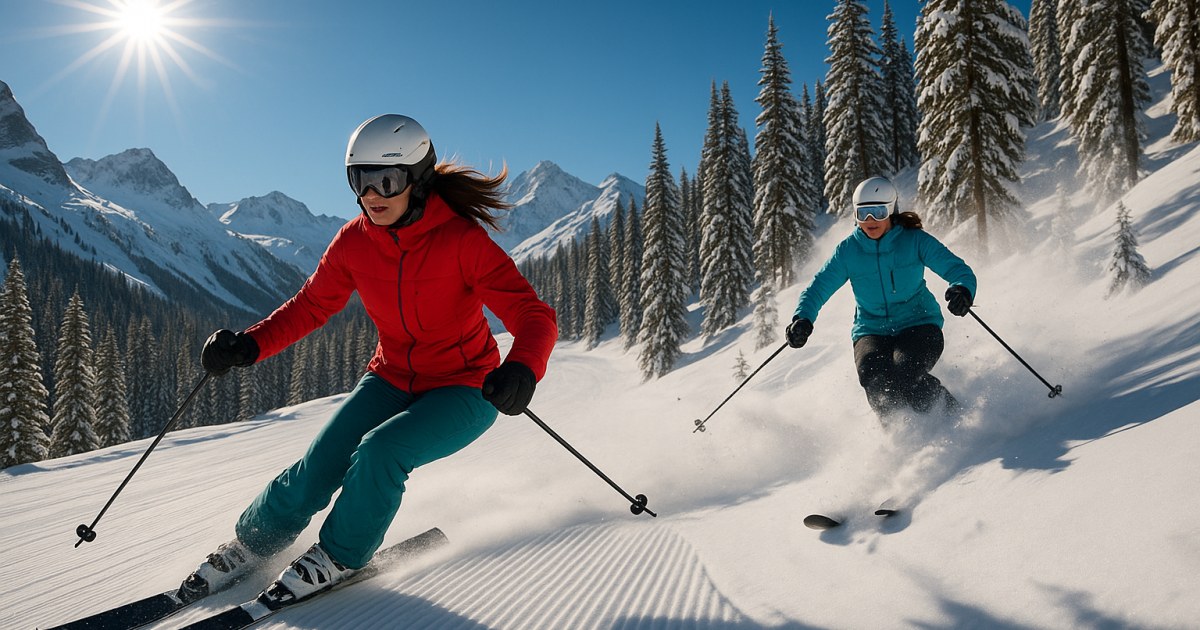
Ski sizing for women is a topic that sparks debate in ski shops and online forums. Many women are told there’s a magic formula for picking length, width, or flex based solely on gender, but that advice rarely holds up on the mountain. The truth is that ski sizing is far more personal and nuanced, and understanding your own needs is the first step to unlocking more confidence and enjoyment every run.
I’ve fit hundreds of women and seen the challenges firsthand: battling old-school myths, decoding marketing lingo, and balancing stability with maneuverability. Fortunately, a little knowledge goes a long way. When you know what really matters (and what’s just noise), you’ll be far more likely to choose skis that help you improve, feel in control, and have fun all season long.
In this guide, we’ll cut through the clutter and focus on practical, data-informed rules. We’ll explore the most common myths, look at what physical and skill factors truly matter, and walk through actionable steps you can use-whether you’re carving groomers, floating in powder, or just building confidence.
Are Women’s Skis Really Different?
It’s easy to imagine that women’s skis are fundamentally different from men’s, given all the marketing hype. Let’s dig into what actually sets so-called women’s skis apart and why that matters for sizing.
Design Differences: Construction and Mount Points
Many women’s skis feature adjustments intended to address common differences in body type and strength compared to men. These may include:
- Lighter core materials (e.g., lighter woods, less metal) to reduce swing weight and fatigue
- Mount points moved slightly forward for easier turn initiation and balanced stance, especially helpful for those with a lower center of mass
- Softer flex patterns (designed to be more forgiving and accessible for lighter skiers)
- Graphics and colorways aimed at women-which, of course, do not affect performance
However, in recent years, ski brands have begun offering unisex designs and sizing, recognizing the diversity of women’s body types, tastes, and skill levels. Some brands now focus on "rider type" or "skier profile" rather than gender, seeking to provide suitable options for every build and style.
Real-World Example: Two Friends, Totally Different Fits
Consider Anna and Mia, both 5'7" (170 cm) and 130 lbs (59 kg). Anna is athletic, aggressive, and enjoys skiing fast on varied terrain, while Mia is a cautious intermediate who spends most days on groomers. Anna might feel comfortable on a 170 cm unisex all-mountain ski, while Mia could be happier-and progress faster-on a 155–160 cm women-specific model with a softer flex. Their physical stats are similar, but their attitudes and abilities require different solutions. This highlights why build and style-not just gendered categories-should guide your choice.
Do These Differences Impact Sizing?
While the construction nuances can create subtle differences in feel, most expert fitters will zero in on your height, weight, skiing style, and terrain preferences, rather than gender labels. A women’s ski in the wrong size will perform worse than a men’s (or unisex) ski fit appropriately for your needs.
Pro tip: Don’t limit yourself to "women’s" skis. What matters most is the ski’s flex, shape, and how they suit your build and style-not the label on the topsheet!
Popular Myths About Women’s Ski Sizing
Let’s address some of the most persistent myths encountered by women choosing skis-for sizing and selection:
- “Women should always size down.”
- “Women’s skis are always softer or shorter.”
- “Lighter = better for women.”
- “Only advanced skiers should ski longer lengths.”
While these ideas contain nuggets of truth, blindly following them often leads to frustration or poor performance. Here’s why:
Sizing Down Isn’t Always Safer
A common misconception is that shorter skis are always easier to control. Sizing too short can actually make skis less stable, especially at speed or in mixed snow. For athletic beginners, or those who ski faster, a slightly longer ski (within your appropriate range) may actually help with balance and float in variable snow, while a too-short ski can be nervous and twitchy.
Real-world mistake example: Olivia, a 5'9" (175 cm) athletic beginner, was advised to buy 150 cm skis. She felt the tips flapped at speed and found off-piste skiing much harder. After sizing up to 165 cm, her stability and confidence increased dramatically.
Ski Construction Isn’t Binary
Some “women’s” skis use softer or lighter constructions, but not all. For example, the Blizzard Black Pearl offers a range of lengths and flex options, suiting a wide spectrum of skiers. Choose flex based on your strength and skiing style-not assumptions about gender. Some women prefer a stiffer ski for stability, while others greatly appreciate a more forgiving flex for easier turn initiation. Many brands let you compare flex and construction using objective data; consult these whenever possible.
Ski Length Correlates More With Weight and Aggression Than Gender
If you’re a tall, strong, or aggressive skier, you’ll likely prefer a longer model. If you’re lighter or more cautious, a slightly shorter length may feel better-regardless of gender. This is why ski coaches often size aggressive young racers up into men’s/unisex models, regardless of gender, while lighter, less aggressive skiers may go shorter or softer. Your skiing personality often dictates proper ski length more than any demographic factor.
Primary Factors for Women’s Ski Sizing
The most important considerations when choosing ski length and profile are universal: height, weight, skill level, preferred terrain, and how aggressively you ski. Gender may influence these factors on average, but individual variation is huge.
| Factor | How It Affects Sizing | Typical Range |
|---|---|---|
| Height | Sets general length range; start between chin and top of head | 145–185 cm skis |
| Weight | Lighter skiers may prefer shorter/softer; heavier may want longer/stiffer for support | 85–220+ lbs (39–100 kg) |
| Skill Level | Less advanced skiers benefit from shorter, more maneuverable skis | Beginner, Intermediate, Advanced |
| Preferred Terrain | Powder = longer, Groomers = mid-length, Bumps = shorter | All-mountain, Powder, Piste, Trees |
| Ability/Aggression | Aggressive skiers size up for stability; cautious skiers may downsize for control | Cautious – Aggressive |
Example: Mid-Height Intermediate Skier
A 5'6" (167 cm), 140 lb (63 kg) intermediate all-mountain skier might look for 155–165 cm skis as a versatile starting point, adjusting up or down a few centimeters based on preference, confidence, and terrain.
The Influence of Ski Profile and Sidecut
The shape of a ski (sidecut, tip and tail rocker vs. camber) can make the same length feel radically different. For example, a 165 cm women's powder ski with lots of rocker will feel far more nimble and forgiving in deep snow than a 165 cm stiff, cambered on-piste ski. A rule of thumb: more rocker allows for a longer ski without sacrificing maneuverability, while more pronounced sidecut increases responsiveness in turns but can make longer skis feel more aggressive.
Step-by-Step: How to Pick Your Optimal Women’s Ski Size
Ready to apply the principles? Here’s a simple, actionable sizing sequence you can use in any ski shop or demo event.
- Determine baseline range. Stand tall; most women’s skis should come between your chin and the top of your head. For most, this means 145–175 cm, depending on height.
- Weigh in. Lighter frame (under 120 lbs or 54 kg) and/or less muscle, lean toward the lower end. Over 150 lbs (68 kg) or strong/aggressive, consider the longer end of your range.
- Match to skill and style. Beginners/cautious intermediates benefit from skis closer to chin height for maneuverability. Stronger, advanced, or aggressive skiers can size up for more stability, especially at higher speeds.
- Factor in terrain. Love powder or ski off-piste? Size up about 5–10 cm for float. Spend time in trees or bumps? Stay closer to the lower end for tighter turns.
- Assess flex and rocker. Softer, rockered skis can be longer and still feel nimble. Stiffer, cambered skis may feel "longer" even at midrange lengths and require more input to turn.
Pro insight: Always try to demo a couple of lengths if possible-differences as small as 5 cm can make or break your comfort and confidence, especially in changing snow conditions.
Tips for Home Fitting
- At home, lean a ski upright beside you-chin to top-of-head length is your ballpark zone.
- If you can, borrow a friend’s pair for a few runs before committing to a size.
- Keep notes in your phone on what worked and what didn’t after each demo day.
Special Sizing Situations for Women
There are certain scenarios where traditional sizing guidelines might need tweaking. Here’s how to handle them:
Lightweight but Tall
If you’re tall but have a particularly light build, resist the urge to always size for height. Stick with a weight-appropriate ski length-too long can feel cumbersome and reduce your control, especially at lower speeds. Skiers in this category often benefit from women-specific or light unisex skis with a softer flex profile, ensuring that they still get the maneuverability and confidence they need.
Short, Athletic, or Strong
If you’re on the shorter side but have a powerful, athletic build (or ski aggressively), you can often manage a slightly longer, stiffer ski than basic height formulas suggest. This is especially true for women coming from other sports (like soccer or hockey) who bring strong legs and core stability to skiing. Don’t be afraid to try skis in the upper end of your height-based range if your technique is strong and you like to charge harder runs.
Backcountry and Touring
- Weight matters more-go for lighter construction to reduce fatigue on the uphill.
- Some prefer skis 5–10 cm shorter than for alpine to save energy during long skins or technical climbs, particularly if they don’t prioritize downhill charging.
- Consider width as well; narrower touring skis (85–98 mm) are more efficient, while wider models are best for deep powder but add weight.
Older Skiers or Those Returning After a Break
- Prioritize control over speed; don’t be afraid to choose shorter/lighter skis if strength or confidence is lower, but be careful not to go so short that stability suffers.
- If skiing mostly on groomers at moderate speed, you may find a midrange women’s ski more comfortable than a longer, stiffer unisex model.
- Pay attention to the binding mounting point; an overly forward mount may help turn initiation but can increase tip chatter at speed.
Comparing Women’s, Men’s, and Unisex Models
If you’re facing a wall of options in-store or online, you might wonder: is a women’s-specific model always the best choice? Here’s how the three broad categories stack up in terms of sizing and feel:
| Model Type | Pros | Cons | Sizing Notes |
|---|---|---|---|
| Women-Specific | Lighter, easier to turn; often forgiving | May "max out" for taller/stronger women | Usually 145–175 cm; flex tailored for lighter weights |
| Unisex | Wider range; high-performance options | Some too stiff/heavy for lighter skiers | Longer lengths available; check weight/flex match |
| Men’s | Stable at speed; more aggressive flex | Heavy/stiff for most women; tiring in bumps | Only consider if strong/advanced; size carefully |
Many advanced women feel most comfortable on unisex models sized for their height, weight, and style. Women who ski aggressively and weigh over 160 lbs often "outgrow" women-specific options and benefit from a stiffer, longer unisex ski, while lighter or less experienced women generally feel more confident on models made specifically for them.
Women’s Ski Size Chart by Height and Weight
Use this chart as a guideline, but remember: every ski model feels different, and preference always matters. Always check manufacturer recommendations, especially with modern shapes.
| Height (cm) | Weight (kg) | Skill Level | Recommended Ski Length (cm) |
|---|---|---|---|
| 150–157 | 40–54 | Beginner | 140–145 |
| 150–157 | 55–68 | Intermediate | 145–155 |
| 158–165 | 55–68 | Beginner | 145–155 |
| 158–165 | 69–82 | Advanced | 155–165 |
| 166–173 | 69–82 | Intermediate | 155–165 |
| 166–173 | 83–100 | Advanced | 165–175 |
| 174+ | 83–100 | Intermediate/Adv | 165–180 |
This is just a starting place-your own comfort and confidence with a given ski shape and flex should drive the final choice.
Summary Table: Women’s Ski Sizing Essentials
| Key Question | General Rule |
|---|---|
| Is a women’s-specific ski necessary? | No, but lighter/flexier skis may suit lighter or less aggressive skiers |
| Should every woman size down? | No, choose length for weight, skill, and terrain |
| What matters most for ski sizing? | Height, weight, skill, skiing style, and terrain |
| Demo before buying? | Yes, whenever possible |
| Is flex as important as length? | Yes-choose flex for strength, not gender |
Tips for a Better Sizing Experience
- Bring your own boots to the shop-boot sole length affects binding mounting and ski feel. Binding adjustment range can also limit your demo/test options.
- Be open to unisex models; don’t let branding limit your options. Women’s, men’s, and unisex skis can all be valid if the sizing and feel is right for you.
- If you fall between sizes or feel unsure, demo both lengths back-to-back on a familiar run. Ask friends or instructors for feedback on your performance.
- Consider the ski’s profile-rockered tips can make longer skis feel shorter, while stiff tails add effective length and kick at the end of turns.
- Ask about binding mount position; some women’s skis have forward mounts for quicker turn initiation. This can help if you have a proportionally lower center of gravity or shorter boot, but not everyone prefers it.
- Don’t be shy about asking fitters in the shop for "off-menu" recommendations. Share your favorite runs, athletic background, and what you find challenging.
- When in doubt, prioritize control and skill progression over chasing the "longest and fastest" or the "lightest and shortest".
Expanded: Mythbusting in Real Scenarios
- Myth: "A women’s ski is always easier for women to use."
Reality: An advanced or strong skier may overpower a soft women’s ski, causing it to chatter or wash out at higher speeds. Try a demo-performance trumps marketing. - Myth: "Skis for women are just rebranded men’s skis."
Reality: Many brands do use genuine construction tweaks, lighter cores, or different mounting points. However, these changes aren’t always needed if you know how to assess flex and weight for yourself. - Myth: "Only heavy or tall women use unisex skis."
Reality: Even petite, aggressive skiers may love a stiff unisex ski if they enjoy high speed or off-piste terrain. Technique and skiing ambition matter most.
Practical Decision-Making Exercises
Try this: Next time you’re in a shop, pull two similar models-one women’s and one unisex. Flex them side by side on the floor. You may notice the unisex one is stiffer in hand. Now, ask about the mounting point. With boots on, see how they balance underfoot. This comparison can teach you more in five minutes than hours of forum reading.
If you’re still undecided, ask the shop to set up a demo day and ski both models back to back. Pay close attention to how the skis feel in terms of initiation, stability at speed, and off-piste confidence.
Conclusion: Empower Yourself with Facts
Women’s ski sizing doesn’t have to be a maze of mismatched advice and outdated formulas. When you focus on facts-height, weight, skill, desired terrain, flex, and personal style-you’ll quickly cut through myths and find skis that actually make skiing more fun and less tiring. Ignore the noise about what you "should" ski solely based on gender labels or stereotypes, and concentrate on the features and feel that suit you.
Remember, every skier’s ideal fit is unique. If you can, demo as much as possible; keep an open mind about model and flex; and don’t hesitate to ask a knowledgeable fitter for a second opinion. The best ski is always the one that lets you ski comfortably, safely, and with a smile.
Related Ski Sizing Guides
Use these calculators and guides to cross-check your setup before your next ski day.