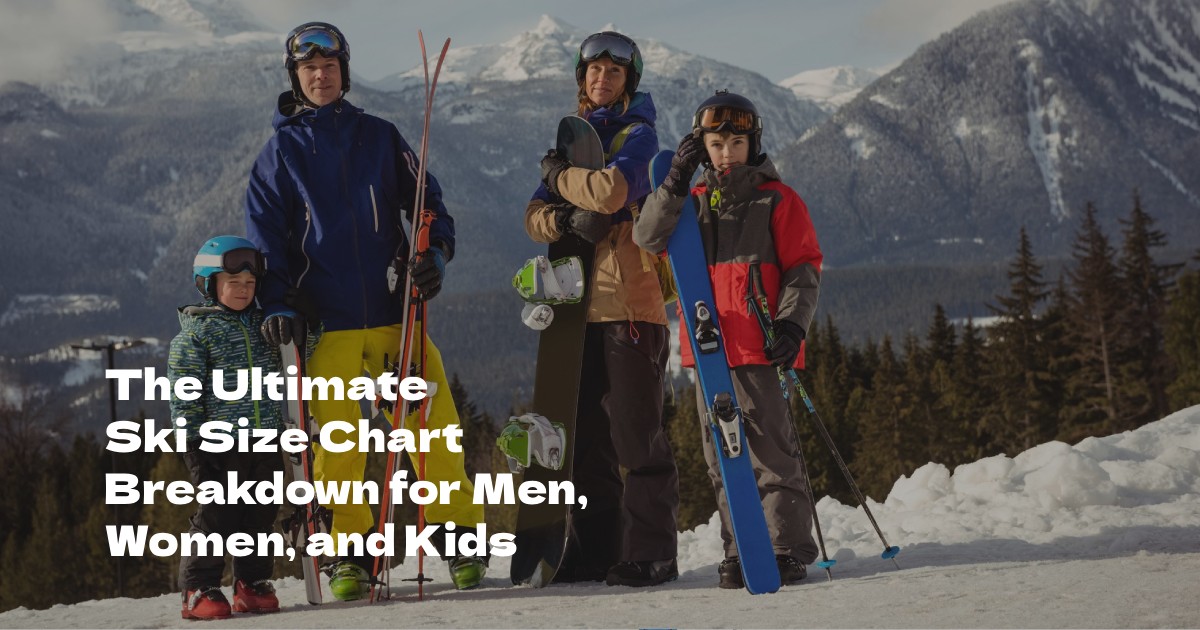
Hello, fellow snow enthusiasts and mountain adventurers! As a ski instructor with three decades of experience under my belt, I’ve had the immense pleasure of introducing countless individuals, from tiny tots to seasoned seniors, to the exhilarating world of skiing. One of the most common questions I get, and arguably one of the most critical for a fantastic day on the slopes, is: “What size skis should I get?” It’s a question that, while seemingly simple, opens up a fascinating discussion about how our unique bodies, skill levels, and aspirations interact with our equipment.
Choosing the right ski size isn’t a one-size-fits-all equation. It’s a nuanced process that takes into account a variety of factors, including your height, weight, gender, age, and most importantly, your skill level and the type of skiing you love to do. A ski that’s too long can feel like trying to steer a battleship, while one that’s too short might leave you feeling unstable and out of control. The goal is to find that perfect sweet spot where your skis feel like an extension of your body, allowing you to glide, turn, and explore the mountain with confidence and joy.
My aim with this comprehensive guide is to demystify the ski sizing process for everyone in the family men, women, and kids. We’ll break down the traditional wisdom, explore the modern considerations, and provide you with clear, actionable advice, complete with detailed charts, to help you make the best choice. So, whether you’re outfitting yourself, your partner, or your little shredders, grab a warm drink, and let’s dive into making your next ski adventure the best one yet!
The Foundational Factors: Height, Weight, and Skill Level
Before we delve into specific charts for different demographics, let’s firmly establish the three pillars of ski sizing that apply to almost everyone:
1. Height: The Traditional Starting Point
Historically, ski sizing began and often ended with height. The general rule of thumb was to choose skis that reached somewhere between your chin and the top of your head. While this remains a valid starting point, it’s crucial to understand that it’s just that a starting point. Modern ski design, with its emphasis on rocker and sidecut, has made skis more versatile, and personal preferences now play a larger role. However, your height still provides a foundational range:
- Shorter Skis (Chin to Nose): Generally easier to turn, more forgiving, and ideal for beginners, cautious skiers, or those who prefer shorter, quicker turns. They require less effort to maneuver.
- Medium Skis (Nose to Forehead): Offer a good balance of stability and maneuverability, suitable for intermediate skiers or those who ski a variety of terrain and speeds.
- Longer Skis (Top of Head and Above): Provide greater stability at high speeds, better flotation in powder, and are preferred by aggressive, expert skiers or those who spend a lot of time off-piste. They require more strength and skill to control.
2. Weight: The Unsung Hero of Ski Sizing
While height gets all the initial attention, your weight is arguably just as, if not more, critical in determining the optimal ski length. Skis are designed to flex, and that flex is directly influenced by the force you exert on them. Your weight dictates how effectively you can bend the ski to engage its sidecut and make a turn [1].
- Lighter Skiers: If you’re lighter for your height, you might struggle to properly flex a longer, stiffer ski. This can make turning difficult and lead to a less responsive feel. Lighter skiers often benefit from skis on the shorter end of their recommended range, or even slightly shorter, to allow for easier flex and better control.
- Heavier Skiers: Conversely, if you’re heavier for your height, you might over-flex a shorter ski, making it feel unstable and less powerful, especially at speed. Heavier skiers typically benefit from skis on the longer end of their recommended range, or even slightly longer, to provide the necessary stability and prevent the ski from washing out [1].
Ignoring your weight can lead to a mismatch where the ski either feels too stiff and unresponsive or too soft and unstable. It’s about finding a ski that offers the right amount of resistance and support for your body.
3. Skill Level: Your Mountain Ambitions
Your current ability and how you aspire to ski are paramount. Be honest with yourself about your skill level, as this will heavily influence the recommended ski length. It’s always better to err on the side of caution and choose a ski that supports your current abilities rather than one you hope to “grow into” too quickly.
- Beginner: You’re just starting out, learning to snowplow, stop, and make basic turns on gentle slopes. Shorter skis (chin to chest height) are your best friend. They are forgiving, easy to turn, and build confidence quickly [2].
- Intermediate: You can confidently link turns on green and blue runs, control your speed, and might be venturing into some varied terrain or light bumps. Medium-length skis (nose to forehead height) offer a good balance of stability and maneuverability, allowing for progression [2].
- Advanced: You can ski most terrain with confidence, including black runs, moguls, and some off-piste. You ski at moderate to high speeds and can handle varied snow conditions.
- Medium to longer skis (forehead height to a few centimeters above) will provide the stability and performance you need.
- Expert: You can ski anything, anywhere, in any condition, with speed and precision. You seek out challenging terrain, deep powder, and high-speed carving. Longer skis (above head height) are often preferred for maximum stability, float, and power [2].
Ski Sizing for Men: Power and Performance
Men’s ski sizing generally follows the height, weight, and skill guidelines outlined above. However, men often have a higher center of gravity and typically exert more force on their skis, which can influence preferences towards slightly stiffer or longer skis within a given range, especially for more aggressive skiers.
Here’s a general ski size chart for men, combining height, weight, and skill level. Remember, these are guidelines, and personal preference, along with expert advice from a ski shop, should always be the final determinant.
| Skier Height (ft. in. / cm) | Skier Weight (lbs / kg) | Beginner (cm) | Intermediate (cm) | Advanced/Expert (cm) |
|---|---|---|---|---|
| 5’0″ / 152 | 100-130 / 45-59 | 140-145 | 145-150 | 150-155 |
| 5’2″ / 157 | 110-140 / 50-64 | 145-150 | 150-155 | 155-160 |
| 5’4″ / 163 | 120-150 / 54-68 | 150-155 | 155-160 | 160-165 |
| 5’6″ / 168 | 130-160 / 59-73 | 155-160 | 160-165 | 165-170 |
| 5’8″ / 173 | 140-170 / 64-77 | 160-165 | 165-170 | 170-175 |
| 5’10” / 178 | 150-180 / 68-82 | 165-170 | 170-175 | 175-180 |
| 6’0″ / 183 | 160-190 / 73-86 | 170-175 | 175-180 | 180-185 |
| 6’2″ / 188 | 170-200 / 77-91 | 175-180 | 180-185 | 185-190 |
| 6’4″ / 193 | 180+ / 82+ | 180-185 | 185-190 | 190+ |
Note: If your weight falls outside the typical range for your height (e.g., significantly lighter or heavier), adjust accordingly. Lighter skiers should consider the shorter end of the range, heavier skiers the longer end. Aggressive skiers might also prefer slightly longer skis. [1, 2, 3]
Ski Sizing for Women: Finesse and Comfort
While the fundamental principles of ski sizing remain the same, women’s skis often feature specific design considerations that cater to anatomical and biomechanical differences. Women generally have a lower center of gravity and less overall mass than men of similar height, which can influence how a ski feels and performs.
Manufacturers often design women’s skis with:
- Softer Flex Patterns: To make them easier to turn and less fatiguing, especially for lighter skiers.
- Lighter Cores: Reducing overall weight for easier handling.
- Forward Mounting Points: The binding mounting point is often moved slightly forward to accommodate a woman’s center of gravity, making turn initiation easier.
These design elements mean that women can often comfortably ski a slightly longer ski than a man of similar height and weight might choose, as the ski’s inherent characteristics make it more manageable. However, the general sizing guidelines still apply. Here’s a general ski size chart for women:
| Skier Height (ft. in. / cm) | Skier Weight (lbs / kg) | Beginner (cm) | Intermediate (cm) | Advanced/Expert (cm) |
|---|---|---|---|---|
| 4’8″ / 142 | 90-110 / 41-50 | 130-135 | 135-140 | 140-145 |
| 4’10” / 147 | 100-120 / 45-54 | 135-140 | 140-145 | 145-150 |
| 5’0″ / 152 | 110-130 / 50-59 | 140-145 | 145-150 | 150-155 |
| 5’2″ / 157 | 120-140 / 54-64 | 145-150 | 150-155 | 155-160 |
| 5’4″ / 163 | 130-150 / 59-68 | 150-155 | 155-160 | 160-165 |
| 5’6″ / 168 | 140-160 / 64-73 | 155-160 | 160-165 | 165-170 |
| 5’8″ / 173 | 150-170 / 68-77 | 160-165 | 165-170 | 170-175 |
| 5’10” / 178 | 160+ / 73+ | 165-170 | 170-175 | 175-180 |
Note: As with men’s sizing, adjust for weight relative to height and consider your skiing style. Women often appreciate the added maneuverability of a slightly shorter ski for quick turns, but don’t shy away from longer skis if you’re an aggressive, high-speed skier. [1, 2, 3]
Ski Sizing for Kids: Nurturing Future Shredders
Sizing skis for children is perhaps the most critical, as it directly impacts their safety, confidence, and enjoyment which are all paramount for fostering a lifelong love of skiing. Kids’ skis are generally much shorter than adult skis, prioritizing ease of learning and maneuverability over speed and stability.
Key considerations for kids’ ski sizing:
- Age and Experience: Younger children and absolute beginners should always be on shorter skis.
- Height and Weight: These are the primary determinants, but always err on the shorter side for beginners.
- Ability and Aggressiveness: As kids progress and become more confident, they can gradually move to slightly longer skis.
Here’s a general ski size chart for kids:
| Child’s Height (in. / cm) | Child’s Weight (lbs / kg) | Beginner (cm) | Intermediate (cm) | Advanced (cm) |
|---|---|---|---|---|
| 36″ / 91 | 30-40 / 14-18 | 70-80 | 80-90 | 90-100 |
| 40″ / 102 | 40-50 / 18-23 | 80-90 | 90-100 | 100-110 |
| 44″ / 112 | 50-60 / 23-27 | 90-100 | 100-110 | 110-120 |
| 48″ / 122 | 60-70 / 27-32 | 100-110 | 110-120 | 120-130 |
| 52″ / 132 | 70-80 / 32-36 | 110-120 | 120-130 | 130-140 |
| 56″ / 142 | 80-90 / 36-41 | 120-130 | 130-140 | 140-150 |
| 60″ / 152 | 90-100 / 41-45 | 130-140 | 140-150 | 150-160 |
Note: For very young or timid beginners, you can even go 10-15 cm below the recommended beginner range for their height. As they gain confidence, they can move up. Always prioritize safety and fun! [2, 3, 4]
Beyond the Chart: Fine-Tuning Your Ski Size
While these charts provide an excellent framework, remember that they are guidelines. Several other factors can influence your final decision:
- Ski Type: As we discussed in previous articles, carving skis are often shorter, while powder skis are longer. All-mountain skis fall in between. Consider the primary type of skiing you’ll be doing.
- Rocker/Camber Profile: Skis with more rocker (early rise in the tip and/or tail) effectively ski shorter, as less of the edge is in contact with the snow. This means you can often go a few centimeters longer on a rockered ski without it feeling unwieldy.
Ski Stiffness/Flex: Stiffer skis require more effort to turn and are often preferred by heavier or more aggressive skiers. Softer skis are more forgiving and easier to manipulate, often preferred by lighter or less aggressive skiers. - Personal Preference: Ultimately, what feels good to you is the most important factor. Some skiers simply prefer the feel of a shorter, more nimble ski, while others crave the stability of a longer one. Don’t be afraid to trust your gut feeling.
- Aggressiveness: If you’re an aggressive skier who charges hard, you’ll likely prefer a ski on the longer side of your recommended range for added stability. If you’re more relaxed or cautious, a shorter ski will be more forgiving.
The Golden Rule: Consult a Professional and Demo!
I cannot stress this enough: visit a reputable ski shop and talk to the experts! A good ski technician will take the time to discuss your height, weight, age, skill level, and aspirations. They can visually assess your stance, recommend specific models, and often even let you try on boots and bindings to get a complete picture.
Even better, if possible, demo skis! Many resorts and shops offer demo programs where you can try out different ski lengths and models for a day. This is the absolute best way to truly understand how a ski feels and performs under your feet in real-world conditions. What looks good on paper might not feel right on the snow, and vice versa.
Conclusion: Your Perfect Ski Awaits
Choosing the ultimate ski size is a journey, not a destination. It’s about combining foundational knowledge with personal experience and expert advice. By understanding how height, weight, skill level, and specific design features all play a role, you’re empowering yourself to make a choice that will enhance every moment you spend on the mountain. Whether you’re a dad introducing your kids to the magic of snow, a mom rediscovering your passion, or a seasoned shredder looking for that perfect new ride, the right ski size is your ticket to a season filled with confidence, control, and pure, unadulterated fun.
So, take these charts as your guide, but let your instincts and the wisdom of the pros lead the way. The mountains are calling, and with the perfect skis underfoot, you’ll be ready to answer!
Happy skiing, everyone!
References
- Powder7. Quick Ski Size Chart & Calculator: https://www.powder7.com/downhill-ski-size-chart/sizing-guide
- Evo. Ski Size Chart & Calculator – How to Choose Skis: https://www.evo.com/guides/how-to-choose-skis-size-chart
- ine Skis. Ski Sizing Guide: https://lineskis.com/en-us/support/ski-sizing-guide
- Skiis & Biikes. Ski Size Chart: How To Choose Ski Length: https://skiisandbiikes.com/blogs/ski-guides/how-to-choose-skis-and-ski-length-chart