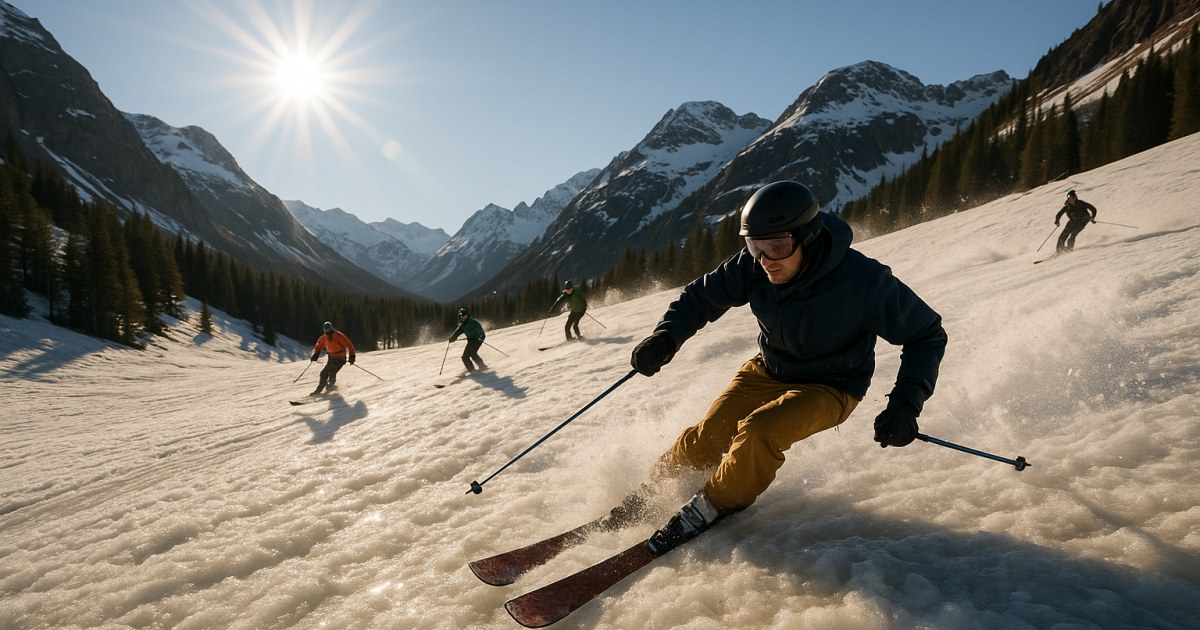
Spring brings longer days and softer snow, and with that comes the unmistakable feel of slush under your skis. It can be equally delightful and demanding – all depending on how you set yourself up for the day. Having the right ski size and shape makes a tremendous difference.
Many experienced skiers actually look forward to spring. Warm weather, blue skies, and forgiving snow can lead to some of the season's most memorable skiing, but only if your equipment is dialed for the shifting, variable conditions.
Whether you're carving groomers, seeking soft moguls, or venturing off-piste, matching your ski length, waist width, and rocker to the demands of spring slush can transform tough slogging into smooth, fun turns. Let's dive into concrete ways to size your skis for the best spring performance.
How Spring Slush Changes Skiing
Spring slush develops as daytime temperatures climb above freezing, melting the snow surface into a soft, often heavy layer. As a result, skis interact differently with the snow than they do on colder, firm winter conditions. Understanding these effects is step one in picking the right spring ski setup.
Slush Characteristics
- Wet snow with a coarse, heavy texture
- Deeper, softer snowpack in the afternoon
- Tendency to form ruts and small moguls
- Quickly changing consistency across the mountain
- Variable stickiness, with patches of slow "grabby" snow
- Potential for standing water or hidden ice under wet layers
These conditions slow skis down and can cause them to "grab" or feel unpredictable-making length, waist width, and edge hold even more critical choices. Spring slush can also hide obstacles and create sudden speed changes, requiring responsive skis and good technique.
What Skis Do in Slush
- Wider skis float over slush better than narrow ones
- Softer flex helps absorb irregularities
- Shorter lengths are easier to maneuver, but longer skis offer more stability
- Rockered tips and tails help prevent "tip dive" and getting hung up in the snow
- Damp ski constructions reduce chatter on rough, irregular surface
Skis that feel perfect in mid-winter ice may fight you in spring-so let’s get granular about what works and why. One of the most notable real-world differences is how a ski that’s described as “energetic” and “precise” on hardpack can feel jarring or exhausting after two slushy laps. By contrast, a wider, playful all-mountain ski can make you wish the season would never end.
Key Ski Sizing Factors for Slush
Ski sizing is always a balance between your ability, body type, terrain preferences, and current snow. Slush presents some specific challenges and opportunities that are different from mid-winter sizing norms:
- Weight Distribution: Heavier, wetter snow resists turning and amplifies mistakes. A ski that floats and distributes weight evenly across the surface keeps you from sinking or getting caught in ruts.
- Flex Pattern: Stiff skis can be unforgiving; softer skis feel smoother and help you stay relaxed through piles and afternoon crud.
- Turn Shape: Slush rewards round, progressive turns, not aggressive edge sets. Skis that like to be skied “centered” rather than on the tip or tail will perform better as the snow gets sticky.
Let’s look at a summary table of how ski length and shape respond to slushy conditions:
| Ski Attribute | Spring Slush Response | Ideal Choice |
|---|---|---|
| Length | Short = Quick turns, but less float. Long = Better stability, more float. | Pick moderate to longer for stability, but don’t go too long for tight terrain. |
| Waist Width | Narrow = Sinks easily. Wide = Rides over slush, but may be sluggish edge to edge. | Upper mid-fat: 95-105mm for most; up to 110mm for resort off-piste. |
| Rocker/Camber | Traditional camber can 'catch' in slush. Rocker helps initiate turns and float. | Tip and tail rocker with some camber underfoot. |
| Flex | Stiff = Transmits vibrations. Soft = Smoother ride in ruts and piles. | Medium-soft flex for playful, forgiving feel. |
Practical tip: If you’re debating between two lengths, slightly longer skis can reduce tips diving and help you glide atop the slush. But be honest about your ability to control longer boards in tight spots!
Recommended Ski Lengths for Spring Conditions
Ski length is often the first choice you’ll face. For spring use, you want enough length to provide flotation and stability, but not so much it’s a struggle in tight bumps or on variable terrain. A ski that is too short may "hook" or get bogged down, while an excessively long ski-especially if overly stiff-can become difficult to maneuver as snow piles form.
General Sizing Guidelines
As a rule of thumb, start with chin-to-forehead height for all-mountain spring skis. For example, a skier 180cm (5’11”) tall would aim for skis 170–185cm. Skiers who like to ski fast, or weigh above average for their height, should favor the longer end of the spectrum.
| Skier Height (cm) | Suggested Ski Length (cm) – Spring Slush |
|---|---|
| 150-160 | 145-155 |
| 160-170 | 155-165 |
| 170-180 | 165-175 |
| 180-190 | 175-185 |
| 190-200 | 185-195 |
Adjust up or down within the range based on skill, weight, and intended terrain. Lighter or less aggressive skiers can stay shorter; strong, fast skiers can size up for speed and stability.
Real-World Example: Sizing for a Versatile Day
Let’s say an intermediate skier at 175 cm tall, who weighs 80 kg, wants to ski primarily groomers with some side hits in late April. Their ski of choice might be a 170–175 cm ski with a waist width of 98 mm. If the same skier plans a powder hunt after a big April dump, bumping up to 178 cm and 105 mm underfoot provides better float and less "trenching" through afternoon slush.
Factors That Influence Length Choice
- Skill Level: Advanced and expert skiers control longer skis better at speed. Intermediate or less aggressive skiers typically benefit from easier-turning, shorter lengths.
- Terrain: Off-piste or choppy snow favors longer skis, while moguls and tight trees call for more maneuverable, shorter options.
- Weight: Heavier skiers benefit from extra length, adding more surface area against thick, wet snow.
- Riding Style: Playful, surfy skiers may prefer shorter, more rockered skis, while chargers will opt for longer, stiffer ones.
Avoid extremes: Going too short results in a nervous, twitchy feel in heavy spring snow. Conversely, a ski that's much taller than you can be burdensome-especially in narrow couloirs, tight trees, or late-day demolition-derby moguls. Getting the length right is about striking a balance between float and agility.
Remember: There’s no "perfect" spring ski size, just a balance between control and float. Test what feels right, and don’t shy away from renting or demoing different sizes in varied slush.
Waist Width and Shape Considerations
For spring skiing, waist width takes on heightened importance. Too narrow, and you’ll be jackhammering through slush piles. Too wide, and turning requires extra effort when snow starts to refreeze. Unlike January, the snowpack is rarely consistent from top to bottom, so versatility is key.
Ideal Waist Widths for Spring
Most spring-focused skiers should stick with an upper mid-fat waist:
- 95-105mm: Works for most resort terrain, providing both float and agility.
- 100-110mm: Better for off-piste and soft, broken snow, at the expense of some edge-to-edge speed on hardpack.
- 85-95mm: OK for frontside carving, but can dive or feel unstable in the deepest slush.
If you typically chase soft, untracked patches or like to play in the sidecountry, err on the wider side. Some aggressive skiers even opt for 112–115 mm powder skis, but these can be sluggish if you find yourself on firm, sun-cupped surfaces or need to traverse long flat sections.
Comparing Different Ski Shapes in Spring Slush
- Traditional Carving Skis (65–85 mm): Lightning quick on icy mornings, but easily overwhelmed by deep, spongy slush. Frequent tip dive and challenging edge release in sticky snow.
- All-Mountain Mid-Fats (90–100 mm): Straddle the line well-nimble enough on hard snow, but sufficient surface area to "surf" over soft patches. Good choice for mixed days that start firm and end in slush.
- Wide All-Mountain/Freeride (100–112 mm): Slightly heavier edge-to-edge, but in all but the hardest spring mornings, they float above the mess. Surfy feel in heavy, cut-up snow. Ideal for sidecountry and bowls.
Profile: Rocker, Camber, and Spring Conditions
Nothing influences ski feel in slush quite like the rocker-camber profile. Rockered tips and some tail rise allow you to "plane" over wet snow instead of digging in. Traditional camber underfoot helps grip, but too much camber makes skis unpredictable as the snow grabs edges.
- Tip Rocker: Essential for keeping the shovel above the snow as you ski slush heaps.
- Tail Rocker: Improves release at the end of turns, preventing hang-ups in grabby snow.
- Flat or Subtle Camber: Underfoot camber supports carving but isn't too catchy in soft conditions.
Real-World Example: Rocker Profile and Slush
A ski like the Salomon QST 99, with generous tip and tail rocker and a moderate 99 mm waist, gives a playful ride and stays afloat through choppy slush while still carving on morning corduroy. Compare this to the Head iTitan, a stiff, narrow (80 mm) traditional carver with little rocker: it dazzles on dawn hardpack but plunges and struggles as the snow softens.
Flex and Construction for Slushy Snow
The best spring skis feature a moderate to soft flex, making them more forgiving and less punishing over bumpy, inconsistent spring surfaces. Absorbing the undulating terrain found in slushy afternoons is crucial for comfort and confidence. Stiff, race-inspired skis will transmit every bump and grabby patch directly to your legs, whereas a ski with a more compliant flex profile will help you stay nimble and less fatigued by day’s end.
Table: Construction Elements to Look For
| Construction Feature | Benefit in Spring Slush |
|---|---|
| Composite/Poplar Core | Light, playful feel, easy on the legs in heavy snow |
| Minimal Metal Layers | Reduces weight, improves ease of handling in bumps and ruts |
| Rubber Dampening | Helps absorb chatter from bumpy, inconsistent surfaces |
| Full Sidewall | Enhances edge hold, but isn't as critical as in icy conditions |
| Durable Top Sheet/Edge | Protects against increased debris and rock exposure in spring |
Durability still matters: spring snow contains more debris, so make sure your edges and bases are in good repair, and consider a ski with robust construction if you regularly ride over rocks or through brush.
Ski Flex Comparison Chart
| Flex Rating | Spring Slush Performance | Best For |
|---|---|---|
| Soft (1-4) | Very forgiving, eats up bumps but can feel unstable at higher speeds. | Beginner, low-speed cruising, mellow terrain |
| Medium (5-7) | Great all-arounder, smooths chatter, keeps adequate stability. | Intermediates and advanced skiers on all terrain |
| Stiff (8-10) | Can feel harsh and "planky" in slush, tiring fast. Only for experts expecting to ski aggressively all day long. | High-speed experts, firm snow only |
Many manufacturers specify flex profiles in product info or online reviews-always check to ensure you’re not selecting a ski that will exhaust you in warm, rutty conditions.
Ski Selection by Skill Level and Preferred Terrain
Every skier has different priorities. A beginner may want maximum predictability and forgiveness, while experts may seek stability at speed and the ability to blast through afternoon slush piles. Here’s how to fine-tune your ski size and shape for spring, broken down by ability and terrain preferences:
For Beginners and Intermediates
- Avoid super-wide skis; stick in the 90-100mm range for ease of turning.
- Keep length at or just below your height for quicker responses at lower speeds.
- Seek softer flex and moderate tip/tail rocker for forgiveness.
- Don’t be afraid of renting or demoing-spring is a perfect time to experiment, since falls are usually softer and conditions change rapidly throughout the day.
For Advanced and Expert Skiers
- Wider, longer skis increase stability and float in deep, wet patches (100-110mm, up to forehead height or a touch more).
- Stiffness can be higher, but don’t overdo it-slush humility helps.
- Look for energetic, playful constructions for spring creativity.
- If you want to charge steeps and ski at top speeds, opt for longer skis with powerful, lightweight construction-carbon stringers and limited metal provide the right blend.
Terrain-Specific Suggestions
- Groomers: Slightly narrower waist (90-100mm), moderate length, tip rocker. These skis hold a turn on morning corduroy but won't bog down after lunch.
- Moguls and Trees: Shorter skis with good tail rocker for quick pivots (at or slightly below your height). Look for a softer to medium flex to absorb the rapid terrain changes in spring bumps.
- Off-Piste and Bowls: Longer, wider skis with substantial rocker (100-110mm, up to 10cm above head height). Power through mashed potatoes and avoid "tip dive" in wet soft patches.
Case Study: Mixed Spring Day
Jill, an advanced Tahoe skier (168 cm, 67 kg), reports using a 172 cm all-mountain ski (101 mm underfoot, full rocker) for late March mornings that start icy and end with "elephant snot" on the lower slopes. She notes the extra length and surface area let her keep speed in flat sections, while rocker makes tight, bumpy trees much less of a chore in the mashed slush.
Spring Slush Ski Care and Adjustment Tips
Your spring ski setup will perform best with intentional care and a few simple equipment tweaks. In fact, dialing your maintenance and setup is just as important as ski size for tackling slush successfully:
- Wax for warm temps: Use a soft, warm-weather wax to reduce suction from sticky slush. Reapply more often-a single warm ski day can strip away a mid-winter wax quickly.
- Edge tuning: Don’t oversharpen-slush demands less edge grip, and highly tuned edges can feel grabby. Consider dulling tips and tails slightly for a smoother turn transition.
- Check bindings: Release/forward pressure can change as snow gets heavier. Inspect regularly, especially if you’re adjusting boot styles for spring.
- Dry thoroughly: Wet spring conditions mean skis are prone to rust. Wipe them dry daily, especially after skiing through puddles or dirty snow.
- Inspect and repair bases: Hidden rocks and debris can do damage as slush melts out late in the season. Fill core shots and deep scratches promptly.
- Carry a brush: Some skiers find bringing a nylon brush and re-polishing at lunch helps keep bases gliding after sticky sections.
Adjusting your skiing stance and technique also helps: stay centered, keep knees flexible, and roll your ankles gently instead of pressuring hard on edges. Avoid fighting the ski; be loose and let the slush guide your tempo. Short, round turns and a "light feet" philosophy minimize fatigue and keep skiing joyful even as conditions degrade.
Quick Reference: Spring Slush Ski Size Summary Table
| Skier Type | Height (cm) | Weight (kg) | Rec. Ski Length (cm) | Waist Width (mm) | Profile |
|---|---|---|---|---|---|
| Beginner | 160 | 60 | 150-160 | 90-95 | Tip-rocker, soft flex |
| Intermediate | 170 | 70 | 160-170 | 95-100 | Tip-tail rocker, med flex |
| Advanced | 180 | 80 | 170-180 | 100-105 | All-mountain rocker, med flex |
| Expert | 185+ | 85+ | 175-190 | 105-110 | Full rocker, lively |
Final Thoughts and Practical Takeaways
- Spring slush rewards slightly longer, wider skis with moderate flex and ample rocker.
- Don’t be afraid to step outside your regular winter size chart for extra confidence in the slush.
- Match your ski length and width to both your ability and your favorite terrain, not just your height.
- Choose construction features (less metal, more damping, durable topsheets) that support spring conditions.
- Keep your gear tuned and maintain a playful mindset-spring is the season to experiment!
- Try before you buy: Spring demo days are common at many resorts and offer a chance to test wider, rockered skis in real slush. Take advantage and find what works for your style.
- Remember, the best ski for you is the one that keeps you smiling as snow, sun, and conditions change throughout the day.
Ultimately, personal taste and comfort matter as much as the numbers. The best way to size for spring is to try a few types, pay attention to how they interact with messy, warming snow, and choose what makes you smile most from first chair to last lap. The right ski, properly sized, lets you float, dance, and make the most of every closing-day lap. Happy spring skiing!