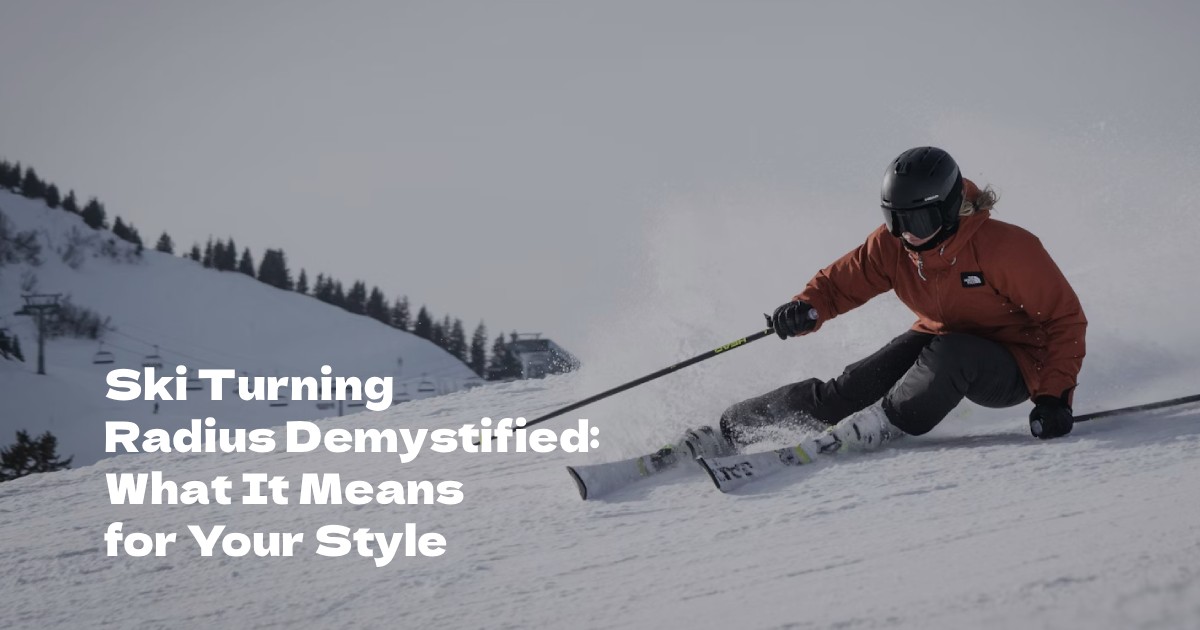
Hello, fellow snow adventurers! As a ski instructor with three decades of experience, I’ve had the pleasure of watching skiing evolve from the days of long, straight planks to the highly specialized, shaped skis we use today. This evolution has been driven by a single, powerful concept: the turning radius. It’s a term you’ll see stamped on every modern ski, usually a number followed by the letter ‘m’ (like 15m or 22m), and it is arguably the single most important factor that dictates the personality of your ski and the style of your ride.
For many skiers, this number remains a mystery. They know it’s important, but they aren’t quite sure how it translates to the feeling under their feet. Is a 13-meter radius better than a 20-meter radius? The answer, like most things in skiing, is: it depends entirely on what you want to do on the mountain! Understanding the turning radius is the key to unlocking the full potential of your equipment and choosing a ski that truly complements your personal style.
My goal here is to demystify this critical concept. We’re going to break down the physics of the turning radius, explore how it’s measured, and, most importantly, show you exactly how that number affects your turns, your speed, and your overall experience on the snow. By the end of this guide, you’ll be able to look at that number on a ski and instantly know if it’s the right partner for your mountain ambitions.
What Exactly is the Turning Radius?
The turning radius, often referred to as the sidecut radius (or simply the radius), is a measure of the natural arc a ski will make when it is tilted onto its edge and flexed. It is a geometric property determined by the ski’s sidecut, which is the hourglass shape created by the difference in width between the tip, waist, and tail.
Imagine extending the curve of the ski’s sidecut into a complete circle. The radius of that circle is the turning radius, and it is expressed in meters.
- A smaller number (e.g., 13m): Means the ski has a deeper sidecut (a more pronounced hourglass shape). When flexed, this ski naturally wants to turn in a tighter, smaller circle.
- A larger number (e.g., 25m): Means the ski has a shallower sidecut. When flexed, this ski naturally wants to turn in a wider, larger circle.
It’s important to note that the turning radius stamped on the ski is the design radius, the one the ski wants to make when fully flexed on a flat surface. In reality, you, the skier, have the power to influence the actual turn radius by adjusting two key factors:
- Edge Angle: The more you tip the ski onto its edge, the deeper the sidecut engages, and the tighter the turn becomes.
- Flex/Pressure: The more you push down and flex the ski (by pressuring the middle of the ski), the tighter the arc it will carve.
However, the design radius remains the ski’s core DNA, guiding its intended performance.
The Spectrum of Turning Radii: Short, Medium, and Long
Ski turning radii can be categorized into three main groups, each dictating a distinct style of skiing and terrain preference.
1. Short Radius Skis (Under 15 Meters): The Slalom Specialists
These skis are the speed demons of the turn world. With radii typically ranging from 10 meters to 14 meters, they are built for quick, precise, and dynamic turns.
Personality and Style
- Quick and Agile: They transition from edge-to-edge with lightning speed, making them feel incredibly energetic and responsive underfoot.
- Turn-Focused: These skis demand to be turned. They feel most alive when you are actively engaging their sidecut and linking short, snappy arcs.
- High Energy Return: Due to their deep sidecut and often stiffer flex, they store and release energy powerfully, propelling you into the next turn.
Ideal Terrain and Skier
- Terrain: Perfect for groomed slopes, especially when you want to make quick, rhythmic turns. They excel in tight spaces like moguls and tree runs where rapid direction changes are essential.
- Skier: Ideal for technical skiers who love to carve, those who prefer short-radius turns, and skiers who spend most of their time on groomed trails. They are also excellent training tools for developing strong edge-to-edge technique.
2. Medium Radius Skis (15 to 20 Meters): The All-Mountain Versatility
This is the sweet spot for the vast majority of recreational skiers. Skis in this range are the true all-mountain workhorses, offering a fantastic balance between quickness and stability.
Personality and Style
- Balanced and Versatile: They are quick enough to make short turns when needed, but stable enough to open up the throttle and make medium-to-long arcs.
- Adaptable: They handle a wider variety of snow conditions and terrain with aplomb, from groomed runs to light powder and variable snow.
- Cruising Comfort: They are less demanding than short-radius skis, making them a great choice for all-day cruising without excessive fatigue.
Ideal Terrain and Skier:
- Terrain: The go-to for all-mountain skiing. They perform well on groomed runs, in light powder, and through variable snow.
- Skier: Perfect for intermediate to advanced skiers who enjoy a mix of turn shapes and terrain. If you only want one pair of skis to do everything, a radius in this range is often the best compromise.
3. Long Radius Skis (20 Meters and Above): The Speed and Stability Chargers
These skis are the domain of the high-speed charger and the big-mountain freerider. With a shallow sidecut, they are built for stability, speed, and long, sweeping turns.
Personality and Style
- Stable and Damp: The long radius provides a large, consistent platform on the snow, which is incredibly stable at high speeds. They dampen vibrations and feel composed when charging through crud and chop.
- Speed-Focused: They prefer to run straight and fast. Trying to force a short turn on a long-radius ski requires significant effort and can feel sluggish.
- Flotation Platform: The long, straight shape is often combined with a wider waist and rocker, making them excellent in deep powder where they provide a stable, surfy platform.
Ideal Terrain and Skier
- Terrain: Best for wide-open groomed runs where you can let them run, big-mountain faces, and deep powder.
- Skier: Ideal for aggressive, expert skiers who prioritize high-speed stability and long, sweeping turns. Also favored by heavier skiers who need the extra stability and those who spend most of their time off-piste.
The Turning Radius and Ski Length Connection
It’s crucial to understand that turning radius and ski length are intrinsically linked, but not in a simple one-to-one fashion.
Generally, longer skis have a longer turning radius (a larger number). This is because a longer ski naturally has a shallower sidecut curve than a shorter ski with the same tip and tail width.
However, manufacturers can manipulate the sidecut. A 170cm ski can be designed with a 13m radius (deep sidecut) or a 20m radius (shallow sidecut) by adjusting the tip, waist, and tail widths.
When choosing a ski, you should first decide on the turn shape you want (short, medium, or long radius), and then select the appropriate length within that model based on your height, weight, and skill level.
Fine-Tuning Your Turn: How to Influence the Radius
While the number on the ski is a guide, remember that you are the pilot. You can always make a turn tighter or wider than the ski’s stated radius:
- To Make a Tighter Turn (Shorter Radius): Increase your edge angle and apply more pressure (flex the ski harder). This forces the ski to bend more than its natural arc.
- To Make a Wider Turn (Longer Radius): Decrease your edge angle and use less pressure. This allows the ski to run straighter and make a more drawn-out arc.
The key is that the ski’s design radius represents its easiest and most natural turn shape. If you constantly have to fight your ski to make the turns you want, you likely have the wrong radius for your style.
Turning Radius at a Glance: Matching the Number to Your Style
Here is a simplified chart to help you quickly match the turning radius number to your preferred skiing style and terrain:
| Turning Radius (m) | Primary Turn Shape | Ski Personality | Ideal Skier/Terrain |
|---|---|---|---|
| < 15m | Short, Snappy Turns | Quick, Agile, High Energy | Slalom, Moguls, Tree Runs, Technical Carvers |
| 15m – 20m | Medium, Versatile Turns | Balanced, All-Mountain, Cruising | Intermediate to Advanced, All-Mountain Skiers |
| > 20m | Long, Sweeping Turns | Stable, Powerful, Speed-Focused | High-Speed Chargers, Freeride, Deep Powder |
Conclusion: The Secret to a Perfect Turn
The turning radius is not just a technical specification; it is the blueprint for how your ski will behave on the snow. By understanding this single number, you gain a profound insight into the ski’s intended performance and how it will influence your personal style.
If you love the rhythmic, powerful feel of short, carved turns, look for a smaller radius. If you prefer to open it up and charge through varied terrain with maximum stability, a larger radius is your friend. The right radius will make your skiing feel effortless, intuitive, and incredibly fun.
So, the next time you’re in a ski shop or demoing a new pair, don’t just look at the length and the color. Find that turning radius number, understand what it means for your style, and choose the ski that is begging to make the same turns you are.
Happy skiing, and may your arcs be perfect!
References & Sources
- Jans. Ski Radius and Dimensions Explained. Available at: https://blog.jans.com/ski-radius-and-dimensions-explained
- Snowbrains. What Exactly is a Ski Turn Radius and Which One is Right?. Available at: https://snowbrains.com/what-exactly-is-a-ski-turn-radius
- Renoun. Ski Camber, Rocker, & Sidecut – Everything you need to know. Available at: https://renoun.com/blogs/blog/ski-profiles